Multi-Angle Sales & Customer Analysis
Client Snapshot
Business: Packaging Materials
Industry: Import & distribution of packaging products
Location: Sydney, Australia
Engagement: Remote accounting partnership (3+ years)
The Client imports packaging items from China (in USD) and also purchases some stock locally in
Australia. All sales are made to Australian customers in AUD, creating a mix of multi-currency imports and local-currency sales.
My role combines end-to-end accounting, inventory control, and deep sales & customer analysis to support smarter decisions.
Core Project: Sales & Customer Analysis (ExcelWorkbook)
To give the client a clearer picture of their business, We built a structured Sales & Customer Analysis workbook using data from November 2022 to November 2025. The goal was simple:
"Analyse sales and customers from as many angles as possible, so the owner can see who is driving revenue, where growth is happening, where it is slowing down, and which customers can be re-activated."
WorkbookStructure& QuestionsAnswered
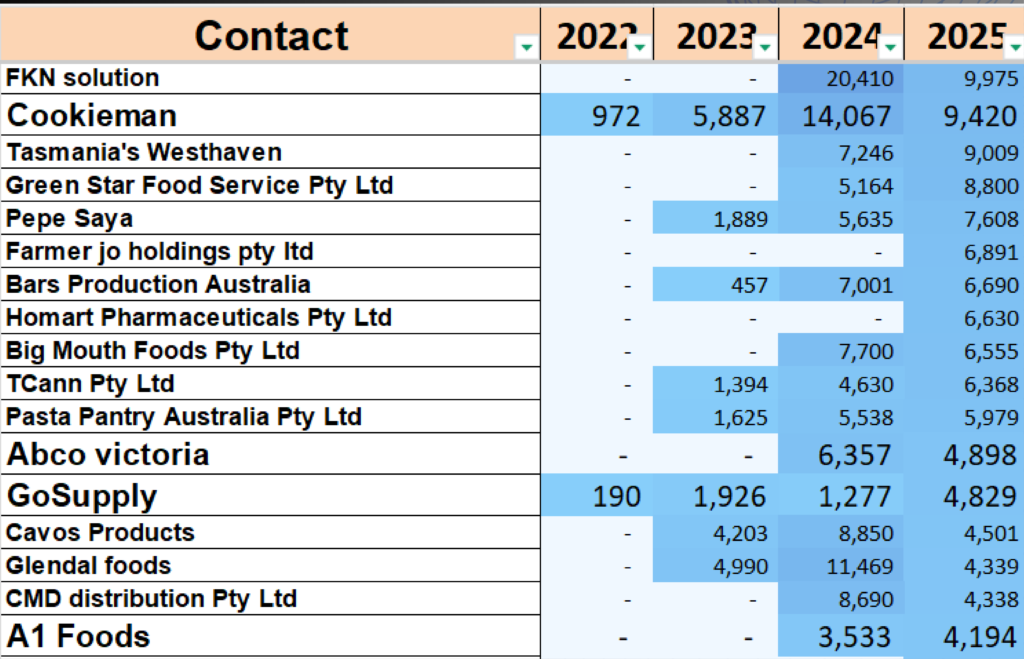
2.Customer_Year_Matrix
How do customers perform year by year?
What WE built:
• A matrix with customers as rows and years as columns (2022- 2025)
• Conditional formatting (heatmap style) to highlight high and low years
How it helps:
• Shows consistent, growing, and declining customers at a glance.
• Helps separate long- term loyal customers from those whose spending is dropping.
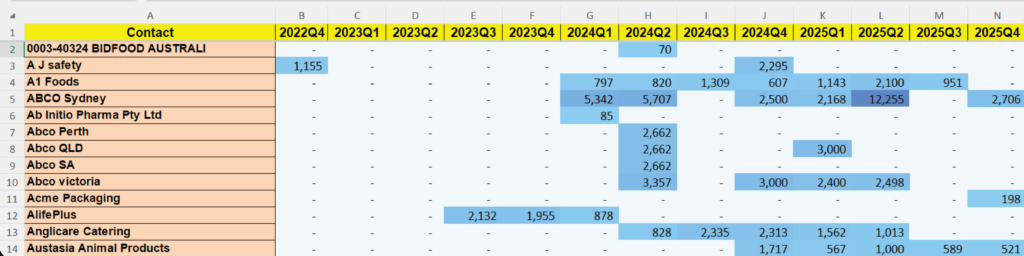
3.Customer_Quarter_Matrix
Is there any seasonal or quarterly pattern in customer buying behaviour?
How it helps:
• Reveals seasonality and customers who buy mainly in specific quarters.
• Supports stock planning and targeted communication around peak periods.
What WE built:
• Quarter-wise sales percustomer
• Colour-scale formatting tohighlight strong and weak quarters
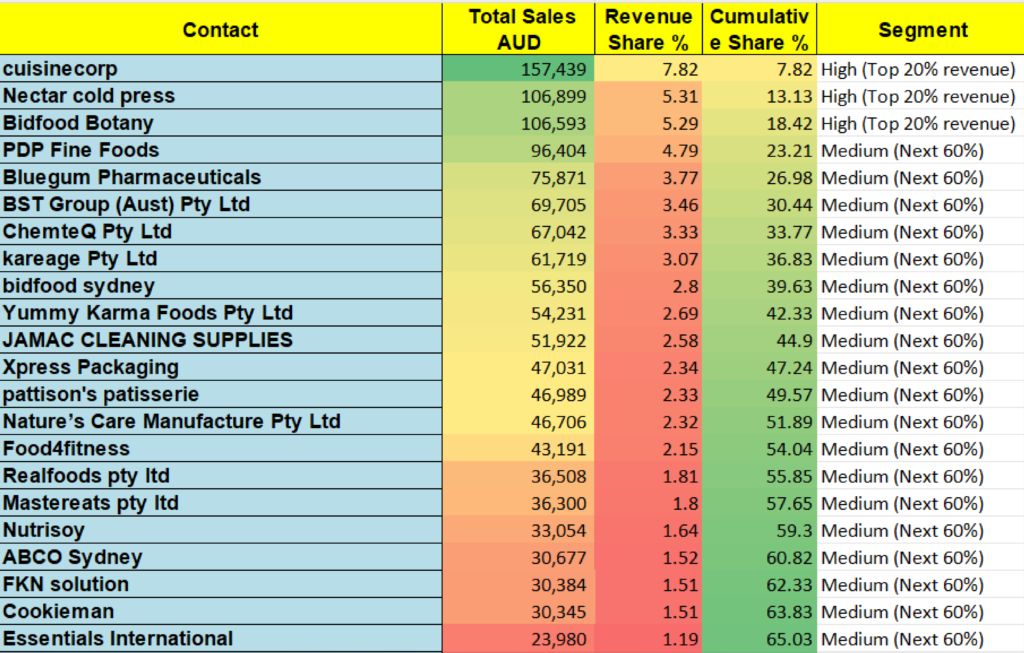
4.Revenue_Segmentation& Top_Customers_Chart
How concentrated is revenue and who are the key accounts?
How it helps:
• Shows that a small number of customers drive a large share of revenue.
• Guides where the owner should invest most relationship and service effort.
What WE built:
• Total sales by customer
• Individual revenue % and cumulative% Segmentation into High (Top 20%), Medium (Next 60%), Low (Bottom 20%)
• A chart of the Top 10 customers by sales
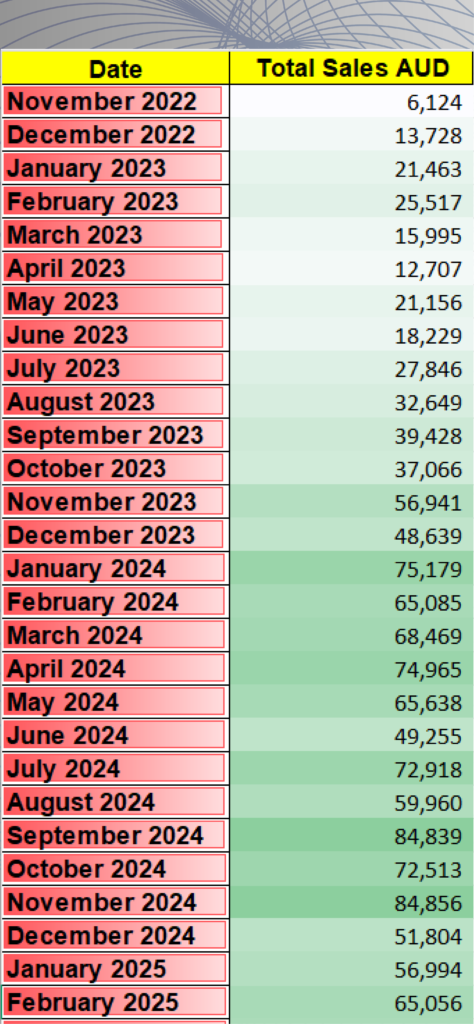
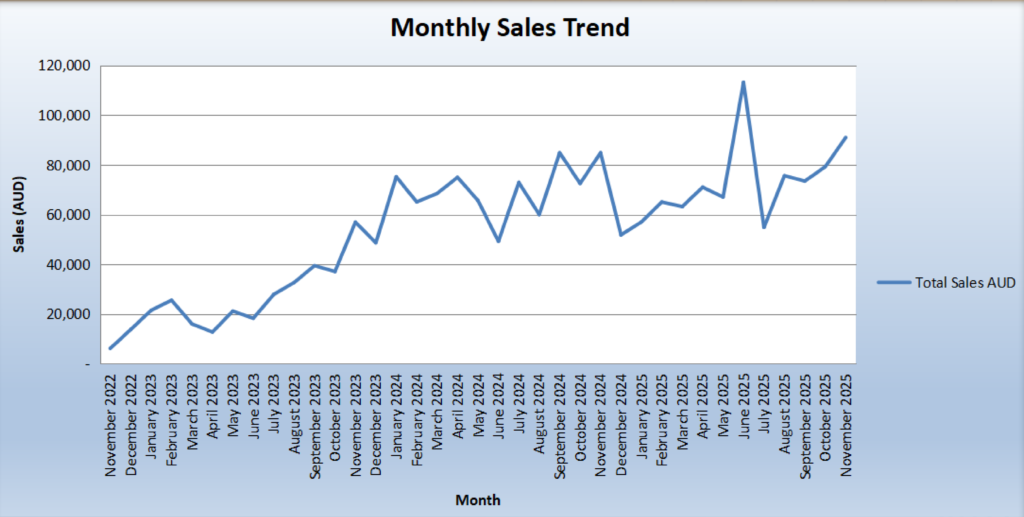
5.Monthly_Trend
What is the overall movement of the business month by month?
How it helps:
• Highlights growth periods, dips, and seasonal cycles.
• Gives a simple visual story of business health over three
years.
What WE built:
• A full monthly sales timeline, with a line chart to visualise
trends
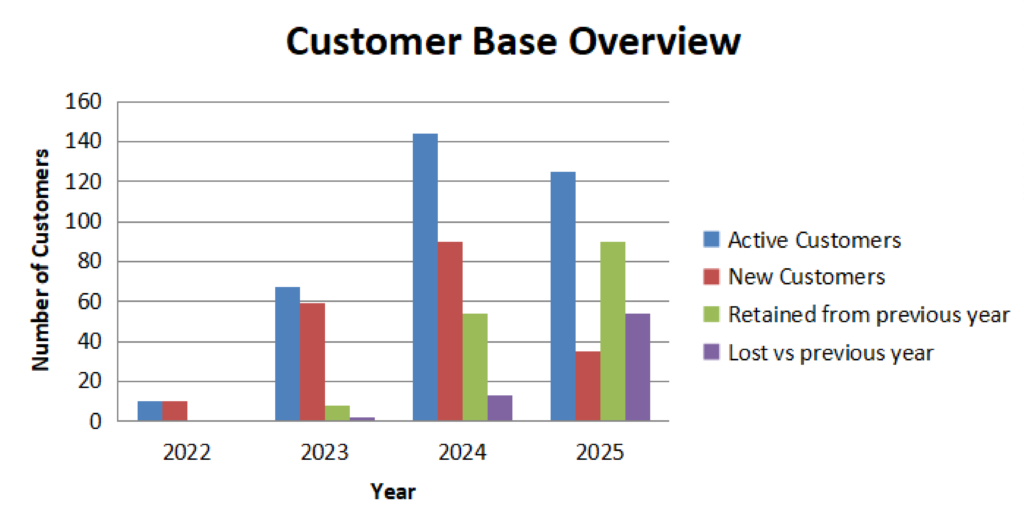
6.Retention_Churn
Is the customer base expanding, stable, or shrinking?
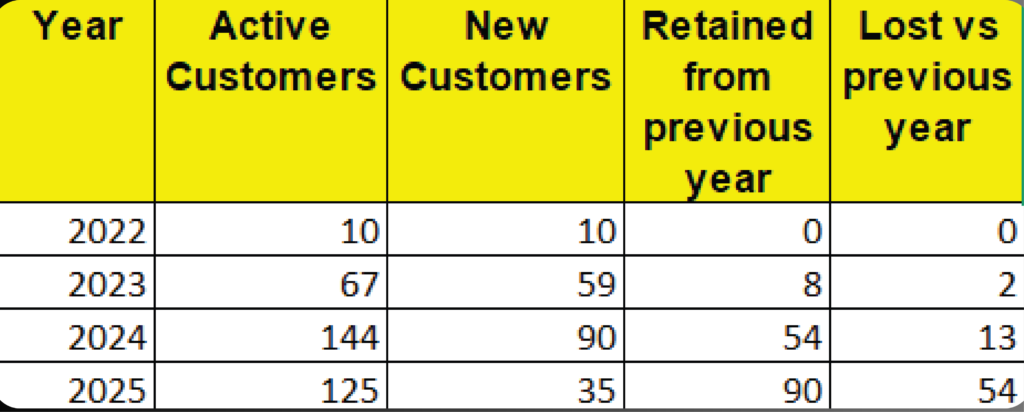
How it helps:
• Shows whether The Client is acquiring and retaining customers or losing them over time.
• Helps the owner think in terms of retention and churn, not just sales dollars.
What WE built:
• Year-by-year summary of:
• Total active customers
• New customers gained
• Customers retained from previous year
• Customers lost vs prior year
All these views and charts were explained to the client in an e-meet, so they could understand the insights in non-technical language and also use filters and charts directly in the workbook.
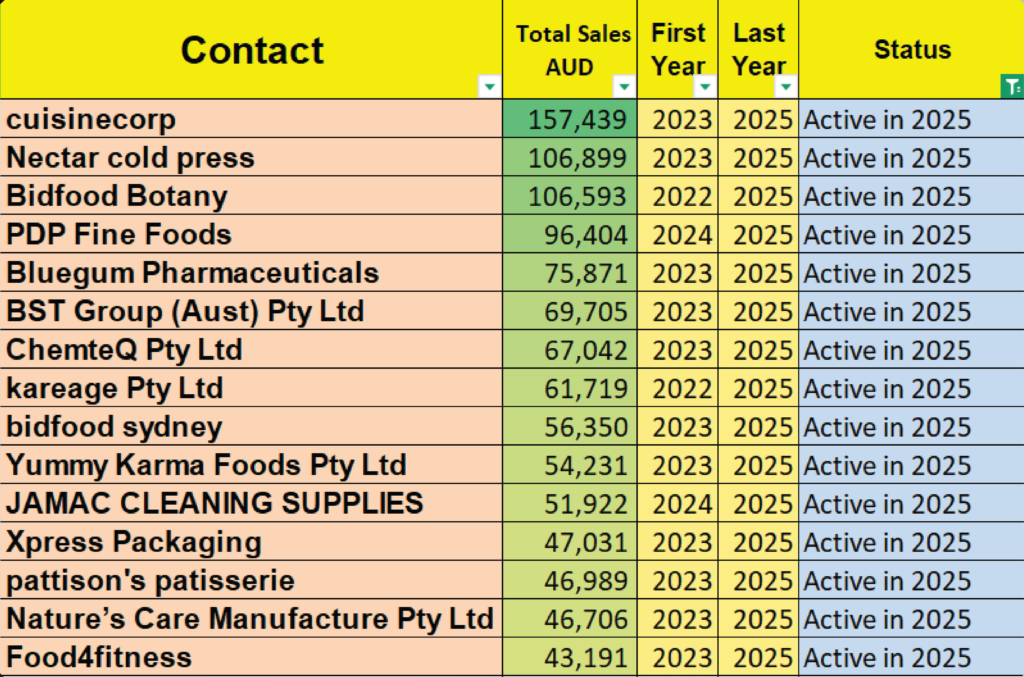
1. Customer_Summary
How it helps:
Instantly identifies inactive
customers who can be targeted for re-engagement and email campaigns.
What WE built:
• Total sales by customer across all years
• First and last purchase year
• A status flag showing whether the customer is
active in 2025 or has become inactive
2.Customer_Year_Matrix
What WE built:
• A matrix with customers as rows and years as columns (2022- 2025)
• Conditional formatting (heatmap style) to highlight high and low years
How it helps:
• Shows consistent, growing, and declining customers at a glance.
• Helps separate long- term loyal customers from those whose spending is dropping.
3.Customer_Quarter_Matrix
How it helps:
• Reveals seasonality and customers who buy mainly in specific quarters.
• Supports stock planning and targeted communication around peak periods.
What WE built:
• Quarter-wise sales percustomer
• Colour-scale formatting tohighlight strong and weak quarters
4.Revenue_Segmentation& Top_Customers_Chart
How it helps:
• Shows that a small number of customers drive a large share of revenue.
• Guides where the owner should invest most relationship and service effort.
What WE built:
• Total sales by customer
• Individual revenue % and cumulative% Segmentation into High (Top 20%), Medium (Next 60%), Low (Bottom 20%)
• A chart of the Top 10 customers by sales
5.Monthly_Trend
How it helps:
• Highlights growth periods, dips, and seasonal cycles.
• Gives a simple visual story of business health over three
years.
What WE built:
• A full monthly sales timeline, with a line chart to visualise
trends
6.Retention_Churn
How it helps:
• Shows whether The Client is acquiring and retaining customers or losing them over time.
• Helps the owner think in terms of retention and churn, not just sales dollars.
What WE built:
• Year-by-year summary of:
• Total active customers
• New customers gained
• Customers retained from previous year
• Customers lost vs prior year
All these views and charts were explained to the client in an e-meet, so they could understand the insights in non-technical language and also use filters and charts directly in the workbook.
Key Insights & Opportunities Highlighted
•A clear list of inactive customers who stopped buying after certain years, ideal for reactivation.
• A visible separation between high-value key accounts and small occasional buyers.
• Customers whose annual sales are consistently growing vs those with declining trends.
• Quarter-specific buyers, helping align inventory and marketing with their buying cycles.
• An overall monthly trend line showing how the business has moved across three years A retention/churn summary that tells whether the customer base is strengthening or weakening year by year.
WE also offered to help draft and send reactivation emails to inactive customers, so this analysis could directly convert into revenue action.
This project is a good example of how WE don’t just “keep books,” but also turn raw data into management insights.
Ongoing Accounting & Inventory Work
4.1 . Import Accounting & Supplier Advances (Multi-Currency)
• Creating and managing USD-denominated Purchase Orders for Chinese suppliers.
• Recording 30% advance payments against a separate Supplier Advances account when no bill exists yet.
• When containers arrive and bills are issued, allocating those prior advances properly to the bills.
• Handling differences between AUD amounts paid via Wise and the USD invoice amounts, including FX impacts.
4.2 . Accounts Payable – With Error Checking & Corrections
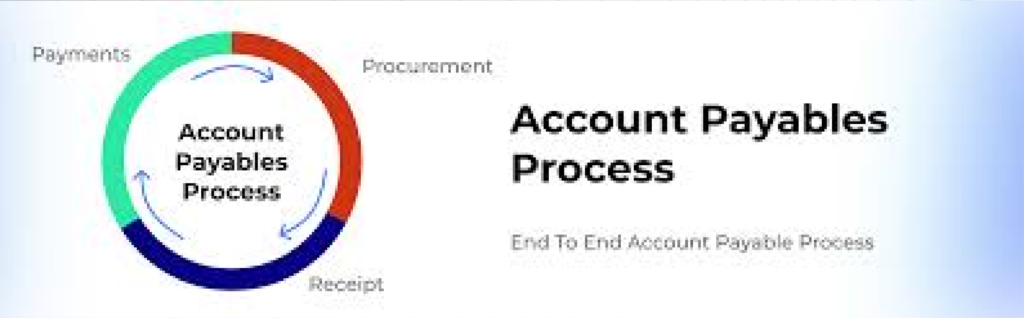
• Recording supplier bills once the shipment is received and approved.
Checking supplier bills against POS for:
• Wrong quantities
• Excluding vs including tax/value differences
• Other input errors
• Correcting those differences before posting, so the accounts reflect accurate and clean numbers.
4.3 . Accounts Receivable – Client Invoices & Bank Feed Reconciliation

• The client team creates sales invoices themselves in Xero.
• WE then reconcile customer receipts from the
bank feeds to those invoices:
• This keeps the bank fully reconciled.
• At the same time, sales and receivables are
updated properly.
WE also prepare aging and customer balance views as needed.
4.4. Inventory Control & Periodic Stock Counts
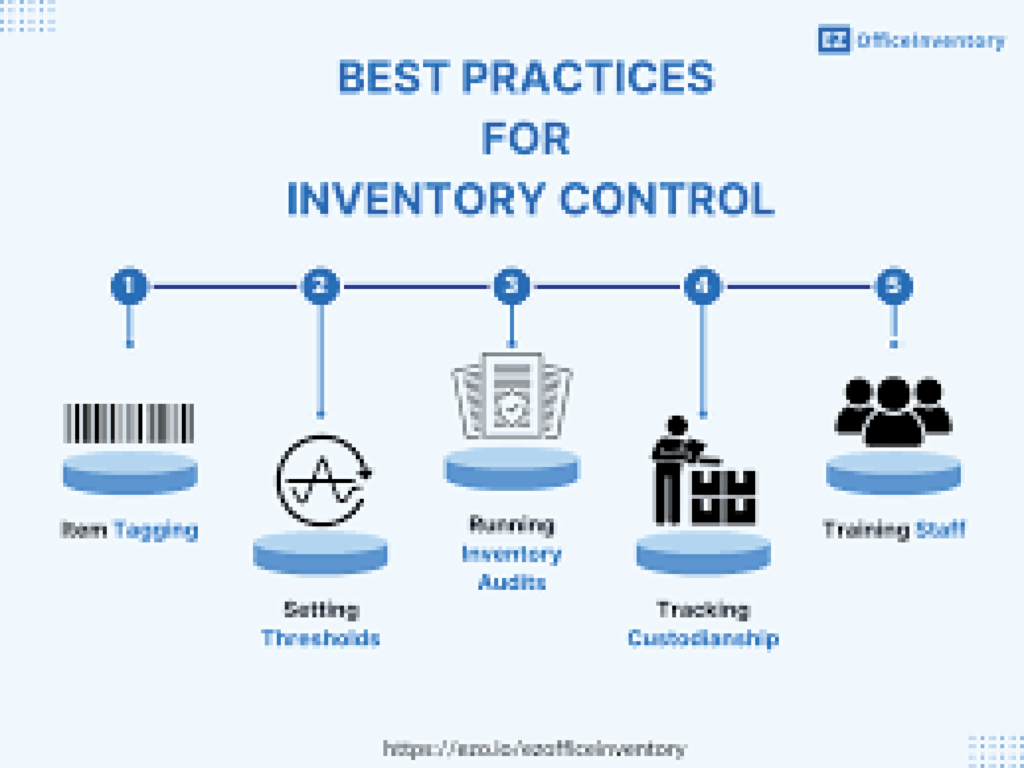
• Maintaining item-level inventory codes so every SKU is tracked properly.
• Matching purchase and sales activity to item ledgers.
• Performing periodic stock counts, usually every three months, rather than only on container arrival.
• Posting stock adjustment journals for differences that appear:
o Sometimes value differences for specific items
o Sometimes quantity differences for specific items
• This keeps inventory realistic and aligned with physical stock on hand.
4.5. Payroll, Commissions, and ATO Filing inventory Control & Periodic Stock Counts

• Preparing fortnightly payroll from timesheets and instructions.
• Calculating and recording sales commissions for eligible employees.
• Handling fuel allowances where applicable.
• Managing ATO payroll filing (STP lodgements) as part of the routine.
• Generating and providing payslips to employees who require them.
4.6. Bank Reconciliation & FX Handling

• Performing regular bank reconciliations in Xero.
• Reconciling Wise transactions and international payments.
• Ensuring supplier advances, invoices, FX gains/losses, and settlements all tie together without unexplained balances.
Tools & Systems Used
core bookkeeping, inventory, payroll, bank feeds
advanced customer, sales, and inventory analytics
international supplier payments (AUD → USD)
Email & WhatsApp - daily communication with the owner and team
Outcomes for the Client
- A of sales and customer behaviour instead of just raw numbers.
- Ability to with reactivation emails.
- Stronger focus on and revenue concentration.
- More informed decisions about stock planning and seasonality.
- Clean, reliable accounting for without needing a full in-house accounts team.
What This Project Shows About My Work
For the Client, WE combined:
- Technical accounting (multi-currency, imports, stock, payroll)
- Data analysis (Excel-based customer and sales intelligence)
- Process discipline (clear workflows for POs, advances, bills, and reconciliations)
So that the owner can see their business from multiple angles and act on it. If you’re an Australian SME or accountancy firm that needs this kind of remote accounting plus insight, I’d be happy to discuss how we can structure a similar setup for you